Long before the world heard of karate, kung fu or taekwondo, the soil of Kerala had already nurtured one of humanity’s oldest and most sophisticated martial traditions – Kalaripayattu. More than a method of self-defence, it is a complete way of life that blends physical strength, mental discipline, flexibility, healing and spiritual balance. Today, as yoga has become India’s most successful cultural ambassador, Kalaripayattu too deserves its rightful place on the global stage.
Kerala has gifted the world many treasures – Ayurveda, Kathakali, Mohiniyattam and the enchanting backwaters. Among these, Kalaripayattu stands out as perhaps Kerala’s greatest contribution to the history of martial arts. Historians believe that its roots stretch back more than two thousand years. The legendary region of Kadathanadu in North Kerala is widely regarded as the cradle of this remarkable martial tradition. The heroes and heroines of the Vadakkan Pattukal, including Thacholi Othenan and Unniyarcha, continue to inspire generations as symbols of courage, discipline and martial excellence. Kalaripayattu is often called the “mother of martial arts.”
Advertisement
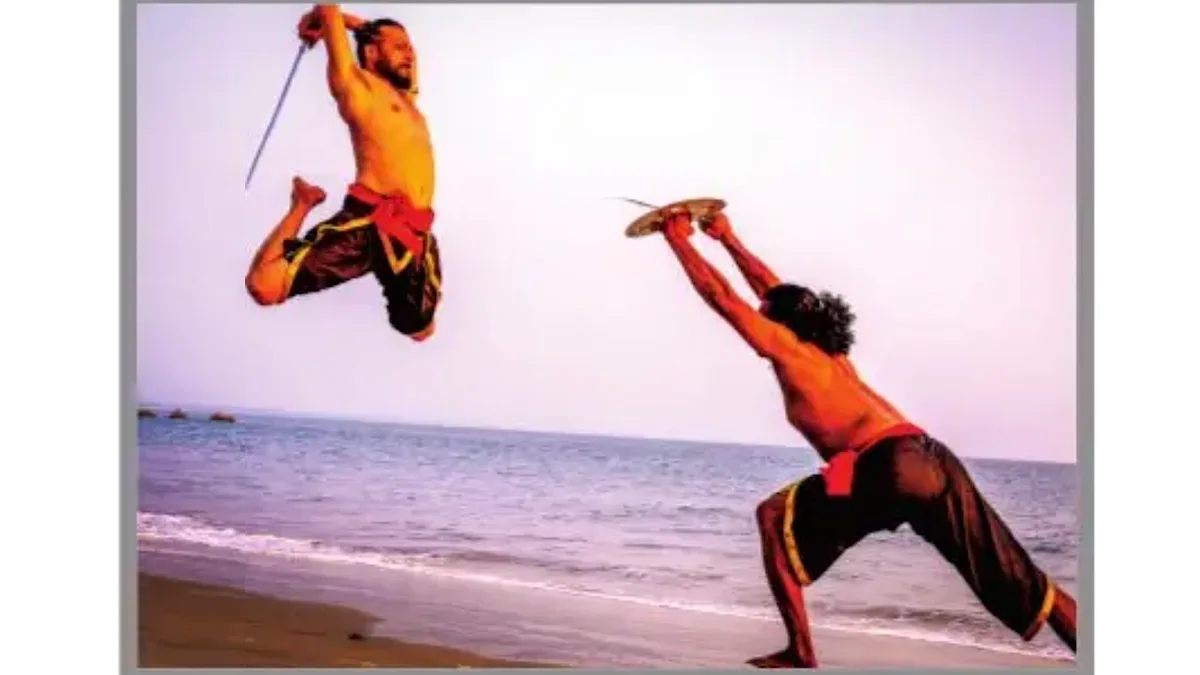
While historians continue to debate the exact historical connections between Asian martial traditions, there is little doubt that Kalaripayattu is among the world’s oldest surviving systems of combat. It combines graceful body movements, lightning-fast footwork, powerful kicks, sword fighting, spear combat, shield techniques, dagger skills and flexible unarmed combat. Every movement demands extraordinary balance, coordination and concentration. It is not merely about defeating an opponent but about mastering oneself.
Many experts observe striking similarities between Kalaripayattu and several modern sporting disciplines. The agility required in cricket fielding, the balance and timing of fencing, the flexibility seen in gymnastics, the body control displayed in circus performances and the precision found in karate and kung fu all remind us of principles that have existed in Kalari training for centuries. The famous animal postures, acrobatic jumps and flowing movements of Kalaripayattu continue to fascinate sports scientists and martial artists around the world.
Perhaps no other traditional Indian martial art integrates medicine and physical training as beautifully as Kalaripayattu. Every Kalari student learns discipline, respect for the teacher, body conditioning and techniques for preventing injuries. The traditional massage therapies and knowledge of vital body points are closely linked with Ayurveda, making Kalaripayattu a unique combination of martial science and healing science. The British colonial rulers clearly understood the power of this indigenous martial system. During the 19th century, after crushing several local rebellions, they discouraged Kalari training, restricted the possession of traditional weapons and weakened institutions that trained skilled warriors.
The colonial administration viewed Kalaripayattu not merely as a sport but as a serious security challenge capable of producing disciplined fighters who could resist foreign rule. The legendary resistance of Pazhassi Raja, whose warriors were renowned for their Kalari skills and guerrilla tactics, only strengthened British determination to suppress indigenous martial traditions. Although Kalaripayattu was never prohibited through a single nationwide ban, colonial policies pushed many Kalari schools into decline. Fortunately, the story did not end there. Dedicated Gurukkals preserved the tradition through generations despite enormous difficulties.
Today, Kalaripayattu has entered a new era of revival. Across Kerala, hundreds of Kalari schools train children, women, professionals and foreign visitors. From village Kalaris to international training centres, this ancient art is once again flourishing. One of the most encouraging developments is the beginning of formal academic education in Kalaripayattu under Kannur University. Bringing this ancient martial art into the university system is a landmark achievement. Academic programmes, diplomas and degrees not only preserve traditional knowledge but also create new employment opportunities for young people.
Professor A. Praveen, Director of Physical Education at Kannur University, rightly argues that structured academic programmes in Kalaripayattu should improve the employability of local youth. Qualified instructors, sports trainers, fitness experts, wellness consultants, therapists, tourism professionals and researchers can all benefit from professional education in this field. Such institutional recognition also gives traditional Gurukkals the respect they truly deserve.
Today, different styles of Kalari training have become increasingly popular. Kuzhikalari, where training takes place in specially prepared sunken arenas, continues to preserve the authentic atmosphere of traditional practice. Other regional styles have also adapted to changing times while retaining their classical foundations. The increasing participation of women has revived the inspiring legacy of warriors like Unniyarcha, proving that courage and martial excellence know no gender. The global popularity of Kalaripayattu is growing steadily.
Wellness centres, yoga schools, theatre academies and martial arts institutes across India and abroad have begun introducing Kalari training. In Auroville, the renowned Hindustan Kalari Gramam has attracted students from many countries. Its founder, Lakshman Gurukkal, beautifully describes Kalaripayattu as the highest form of artistic expression because it develops not only physical strength but also character, confidence, discipline and inner harmony. India has already demonstrated through International Yoga Day how traditional knowledge can become an instrument of cultural diplomacy and soft power.
Millions across the world now practise yoga regardless of nationality or religion. Kalaripayattu has similar global potential. Together, yoga and Kalaripayattu can project India as a civilisation that values health, discipline, peace and human excellence. Cultural tourism, sports tourism and wellness tourism can all benefit immensely from promoting this unique martial heritage. Kerala Tourism, sports authorities, universities and cultural organisations should work together to create international Kalari festivals, coaching certification programmes and research centres.
Demonstrations at embassies, international cultural festivals and sporting events would introduce global audiences to this extraordinary tradition. Documentary films, digital learning platforms and exchange programmes can further strengthen its international appeal. The time has also come for Kalaripayattu to receive recognition within India’s mainstream sporting ecosystem. The Indian Olympic Association should actively promote this indigenous martial art and support its inclusion in national multi-sport competitions. While Olympic inclusion may require a long international process, national recognition is the first essential step.
Countries around the world proudly preserve and promote their traditional martial arts. India should do no less for Kalaripayattu. Every civilisation is remembered by the knowledge it leaves behind. Kerala’s Kalaripayattu is not merely a relic of the past; it is a living heritage that continues to inspire discipline, courage, physical fitness and cultural pride. From the legendary warriors of Kadathanadu to modern university classrooms, from village Kalaris to international training centres, its journey continues with renewed energy. As the world searches for healthier lifestyles and meaningful traditions, Kalaripayattu offers something truly timeless. It deserves wider recognition, stronger institutional support and a respected place among the world’s greatest martial arts. This priceless heritage belongs not only to Kerala but to the whole of India – and increasingly, to the entire world.
(The writer is Professor, Centre for South Asian Studies, Pondicherry Central University)